In today's fast-changing world of communication tech, the role of Rf Filters is more important than ever. Honestly, if you look at recent reports from MarketsandMarkets, they're saying the Rf Filter market could hit around $15 billion by 2025. That’s a pretty big deal and really shows how much we rely on good signal processing these days. Rf Filters are key players—they help us isolate and manage different frequencies during transmission, making sure everything runs smoothly.
And with 5G rolling out, the importance of Rf Filters just keeps climbing. These higher frequency bands mean faster data, but they also come with more interference, so a solid Rf Filter is basically a must-have. Big players like Qorvo and Skyworks Solutions are really pushing forward, creating new and advanced filters to meet these demands. That said, it’s not all smooth sailing—integrating these complex filters into existing systems can be pretty tricky sometimes. Engineers are always pondering how to make designs more efficient, and it’s quite the challenge.
On top of that, relying so heavily on Rf Filters makes us wonder—what’s the long-term game? As tech keeps evolving, we need constant innovation in how these filters are made. But that’s easier said than done—strict standards and lots of testing slow things down. Still, the ongoing search for better, more reliable filters shows how vital continuous improvement is in this space.
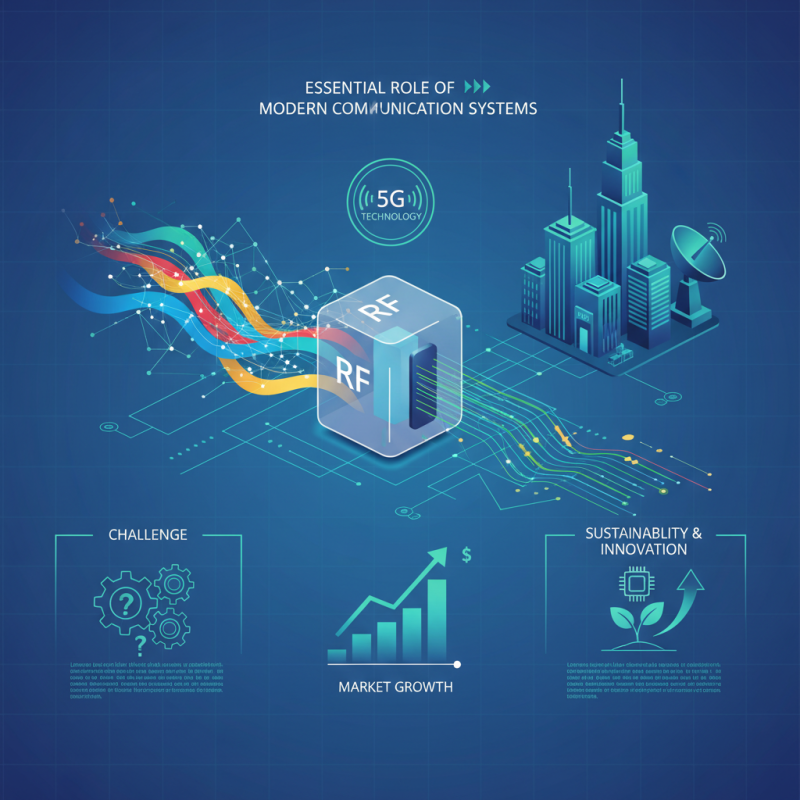
Understanding RF Filters and Their Role in Communication Systems
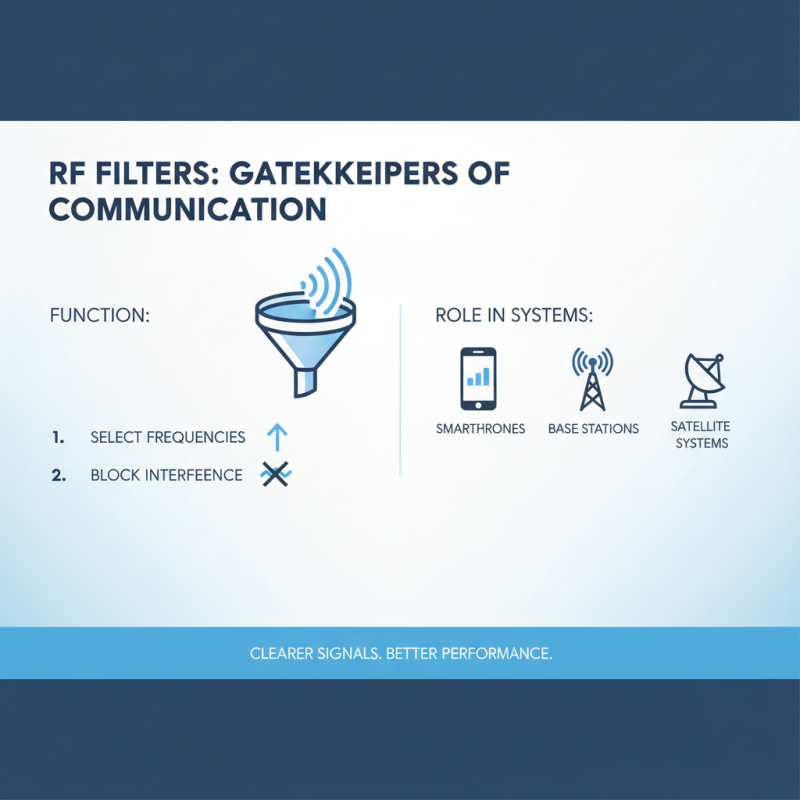
Rf Filters play a crucial role in modern communication systems. They help to ensure that signals remain clear and interference-free. By selectively allowing certain frequencies while blocking others, these filters enhance the performance of various devices, from smartphones to base stations. In essence, Rf Filters are like gatekeepers for information flow.
Consider the example of a 5g Filter. It is designed to handle high-frequency signals efficiently. This is essential for maintaining data integrity and speed. Without these filters, devices could easily become overwhelmed by unwanted signals, leading to dropped calls or slow internet. When designing communication systems, it is vital to choose the right Rf Filters.
Tips for selecting Rf Filters include understanding the frequency range you need. Make sure that the filter can handle the bandwidth required for effective communication. Testing multiple options is also valuable. Don’t just rely on theoretical specifications; practical trials help to identify the best fit. Remember, sometimes what seems perfect on paper may not work as expected in real use.
The Science Behind RF Filters: Frequency Selection and Signal Integrity
In modern communication systems, Rf Filtersplay a crucial role in ensuring signal integrity. These filters selectively allow certain frequencies to pass while rejecting others. This precision enhances overall system performance. Engineers use Rf Filters to minimize interference from unwanted signals, thus ensuring that the communication remains clear and effective.
The science behind Rf Filters involves understanding various frequency ranges. For example, filters can be designed to target specific bands within the RF spectrum. This focus is vital for maintaining signal quality. However, achieving this balance is not an easy task. Sometimes, filters might introduce their own distortions. This is an aspect that engineers continuously strive to improve.
Additionally, the integration of Emi Filters can enhance protection against electromagnetic interference. This is especially important in crowded environments where devices operate closely together. Yet, finding the right filter for each application can be challenging. There is no one-size-fits-all solution. Engineers must carefully assess their specific needs and test multiple configurations to ensure optimal performance. Such iterative processes are essential for advancing communication technologies.
Types of RF Filters Used in Modern Communication Technologies
Rf Filters play a crucial role in modern communication systems. They help manage signal interference and ensure clean transmission. Different types of Rf Filters are used to meet various needs in communication technologies. For instance, bandpass filters allow specific frequencies to pass while blocking others. This feature is vital forLte Filters that support high-speed data transmission.
Another common type is low-pass filters. These filters allow signals below a certain frequency to pass through, effectively eliminating unwanted higher frequencies. They are essential in reducing noise and enhancing signal integrity in crowded frequency bands. High-pass filters serve the opposite purpose, blocking low frequencies while allowing higher ones to pass. This versatility makes RF filters indispensable in today’s wireless ecosystems.
**Tip:** When selecting RF filters, consider bandwidth and insertion loss. Tailoring your filter choice to system requirements can significantly improve performance.
Keep in mind that improperly designed filters may lead to signal degradation. Regular assessment and adjustments based on real-world performance can help optimize communication systems. Balancing cost and effectiveness is always a challenge in filter design. A thoughtful approach is necessary in this rapidly evolving landscape.
Types of RF Filters Used in Modern Communication Technologies
Applications of RF Filters in Wireless Networks and Mobile Devices
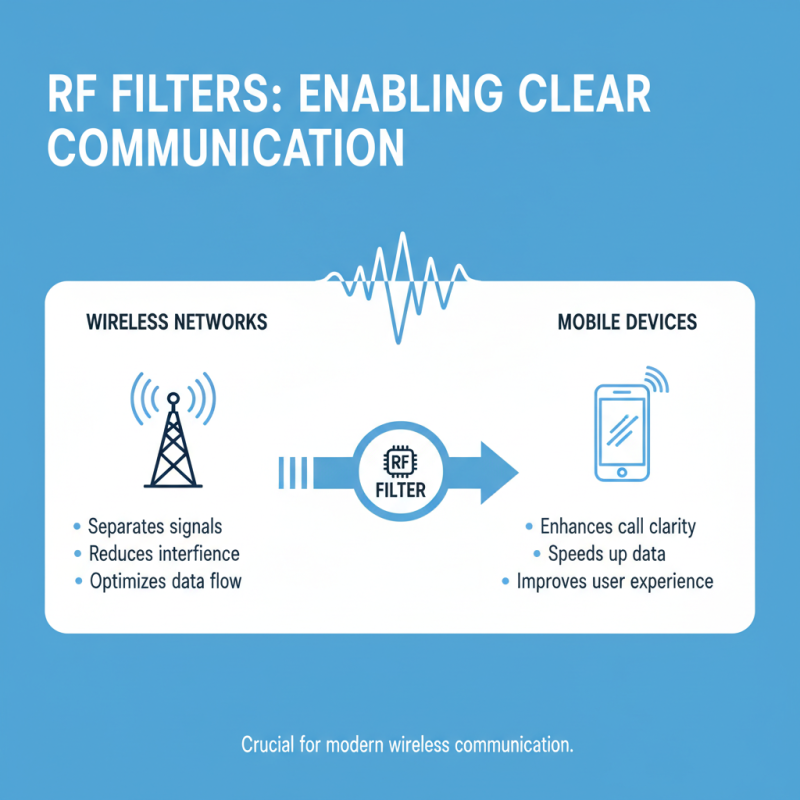
RF filters play a crucial role in modern communication systems, especially in wireless networks and mobile devices. These filters help to separate signals. They allow only desired frequencies to pass through while rejecting noise and unwanted signals. For mobile devices, RF filters enhance the clarity of calls and data transmission. This ensures better user experiences and improved performance.
In wireless networks, RF filters help manage the crowded spectrum. They prevent interference from other channels. By filtering out unwanted signals, the network can operate more efficiently. This is essential for high-speed internet access and reliable connectivity. However, not all RF filters are perfect. Some may have limitations in selectivity or power handling. Engineers must carefully choose the right type of filter for each application.
The integration of RF filters in devices can sometimes lead to design challenges. While these components are vital, they can also increase complexity. Filters can consume space and introduce losses if not designed properly. Thus, balancing performance and practicality is key. It raises a need for ongoing research and improvements in filter technology.
Impact of RF Filters on Signal Quality and Interference Mitigation
In today's communication systems, the role of RF filters cannot be overstated. They serve to enhance signal quality in a world filled with noise. These filters eliminate unwanted frequencies, allowing only the necessary signals to pass through. For instance, a Gps Filter can improve the accuracy of positioning data by minimizing interference from nearby electronic devices.
Signal quality is critical. Without effective RF filters, systems face distortion and loss of clarity. This can lead to communication failures or inaccurate data transmission. In crowded environments, such as urban areas, the risk of interference increases. RF filters help mitigate these issues by isolating the desired frequencies. A well-designed filter will enhance clarity while minimizing background noise.
However, not all RF filters perform perfectly under every condition. Some might be less effective in specific scenarios. This inconsistency raises questions about filter selection and application. It's essential to assess the environment in which these filters operate. Understanding their limitations can lead to better choices. Overall, RF filters are vital, yet they demand careful consideration to ensure the best signal quality.
Future Trends in RF Filter Technology for Advanced Communication Systems
As communication systems evolve, the demand for advanced RF filter technology is on the rise. Modern applications require filters that can handle complex signals while maintaining high performance. Innovations such as digital filtering and tunable RF filters are leading the way. These advancements can significantly enhance signal clarity and reduce interference.
Next-generation RF filters are increasingly focused on miniaturization. Smaller components mean more space on circuit boards for additional functions. However, this trend also poses challenges. Balancing size, weight, and efficiency can be difficult. Designers must carefully consider trade-offs to meet stringent requirements.
Another significant trend involves the integration of AI and machine learning in filter design. AI can optimize filter performance in real time, adapting to changing signal frequencies and conditions. Yet, reliance on technology raises questions about reliability and security. How will systems safeguard against potential vulnerabilities? These are important discussions that deserve attention as we embrace an exciting future in RF filter technology.
Challenges and Innovations in RF Filter Design and Implementation
The design and implementation of RF filters face numerous challenges. One primary issue is the balance between size and performance. As devices shrink, achieving high-quality filtering in compact sizes becomes trickier. Engineers often struggle to maintain efficiency while reducing dimensions.
Recently, innovative materials and designs have emerged. For example, using advanced ceramics can improve performance. However, these solutions can be costly and complex. Simplifying the manufacturing process is crucial for wider adoption.
Tips: Embrace modular designs in RF filter projects. This approach allows easier upgrades and testing. Regularly revisit your designs for potential improvements. Collaboration with multidisciplinary teams can spark fresh ideas. Balancing cost and performance continues to be a challenge that demands creative solutions.
Industry Insights: Enhancing Device Performance with Core Common Mode Line Filters for Optimal Noise Suppression
In the ever-evolving landscape of electronics, the significance of common mode filters has become increasingly apparent, particularly regarding noise suppression in high-current applications. As industries shift towards more intricate electronic systems, such as those found in automotive electronics, the demand for effective electromagnetic interference (EMI) solutions is critical. Recent industry reports indicate that approximately 70% of automotive manufacturers cite noise reduction as a key requirement for their power systems, underscoring the necessity for advanced components designed to handle significant current levels while mitigating noise.
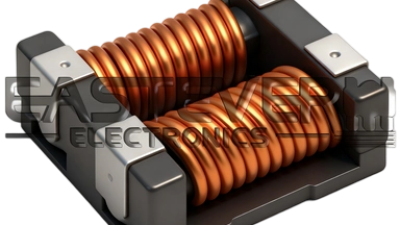
The CMF1080 series common mode filter exemplifies the advancements in this area, featuring an SMD design that accommodates a range of scalable sizes, making it suitable for various applications. Its wire-wound construction allows for superb common mode choke capabilities, ensuring that it can deliver exceptional EMI suppression with high impedance. This attribute is particularly relevant in modern vehicles, where efficient noise suppression can enhance device performance and reliability. With high-rated currents and low DC resistance, these filters stand out in their ability to prevent not only common mode noise but also radiated emissions from power lines and other sources that could affect sensitive electronic circuits.
Moreover, as the automotive sector continues to innovate with in-vehicle power systems, battery management, and motor control units, the relevance of integrating robust common mode filters like the CMF1080 series becomes indisputable. These applications demand components that can maintain performance under challenging conditions, highlighting the balance between current handling capabilities and efficient noise suppression. By incorporating such technology, manufacturers can significantly improve overall device performance and ensure compliance with the stringent industry standards concerning electromagnetic compatibility.
FAQS
: RF filters enhance signal clarity by allowing certain frequencies to pass while blocking others.
They prevent devices from becoming overwhelmed by unwanted signals, ensuring better call quality and faster internet.
Understanding the needed frequency range and bandwidth is crucial for effective communication.
Theoretical specifications might not align with real-world performance, making tests vital.
Bandpass, low-pass, and high-pass filters are key types for managing signal interference.
Balancing size with performance is tough as devices become smaller and more compact.
Advanced materials like ceramics improve performance, though they can be costly and complex to implement.
Poorly designed filters may fail to effectively manage the intended frequency ranges, leading to interference.
Embracing modular designs allows for easier upgrades and improvements over time.
Balancing cost-effectiveness with high performance is an ongoing concern in filter design.
Conclusion
RF filters play a crucial role in modern communication systems by ensuring signal integrity and frequency selection. These filters are designed to allow specific frequency ranges to pass while attenuating unwanted signals, significantly improving communication quality. Various types of RF filters are utilized across wireless networks and mobile devices, helping to mitigate interference and enhance overall signal performance.
As technology advances, the importance of RF filters continues to grow, particularly with the emergence of new communication standards and protocols. Future trends indicate a focus on miniaturization and increased efficiency in RF filter design, addressing both the challenges of integration in compact devices and the need for higher performance. Innovations in this field are vital to supporting the ever-evolving requirements of advanced communication systems, ultimately contributing to better connectivity and user experiences in a wireless world.

 +86-15916242887
 CONTACT US